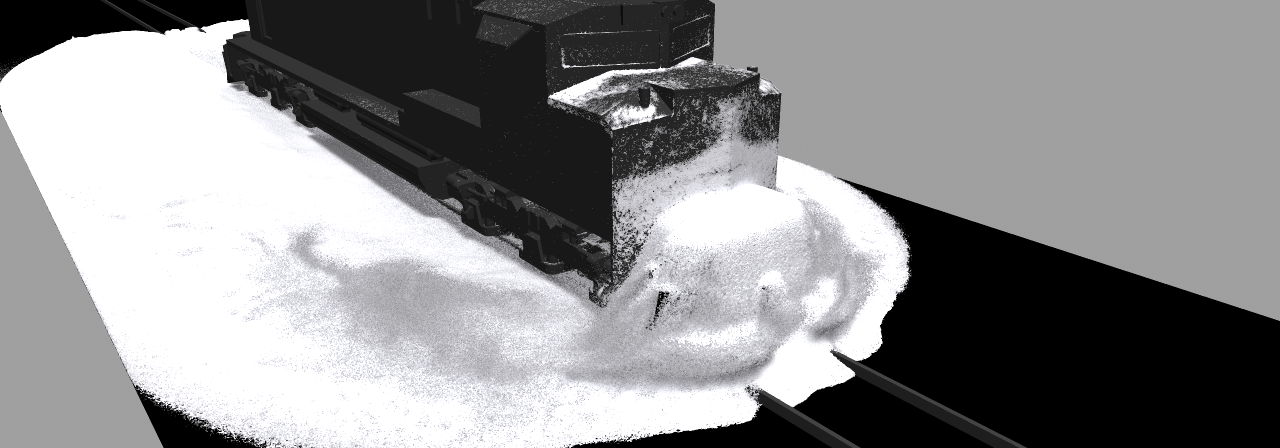
Winter conditions present significant challenges for railway operations. Accumulated snow on tracks poses risks to both safety and operational performance. Train snowplows play a crucial role in mitigating these issues by clearing snow from the rails to ensure smooth and reliable operation. However, optimizing their performance requires an in-depth understanding of snow dispersal dynamics, force distribution, and the effects of accumulation. By leveraging PreonLab’s snow capabilities, these challenges can be effectively analyzed and addressed in a virtual environment before real-world implementation.
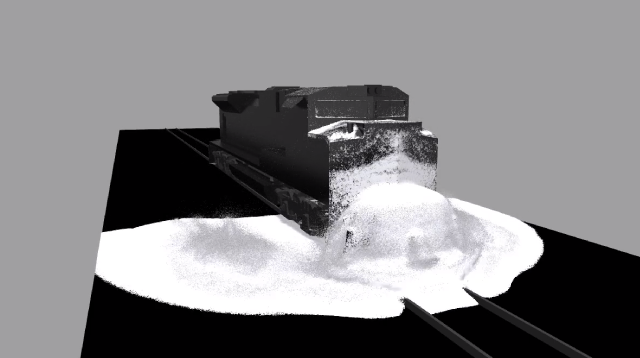
To model snow in PreonLab, our plasto-elastic model is utilized, which is well-suited for capturing the fluid-like and deformable nature of snow. The behavior of snow can vary significantly depending on the type and environmental conditions. For small deformations, snow responds elastically, resisting deformation in a reversible manner. However, when the deformation exceeds a certain critical threshold, critical stretch and critical compression—the snow transitions into plastic behavior. This transition is modeled using a principal-stretch-based yield for plasticity, which provides a realistic simulation of snow under stress.
PreonLab offers predefined snow types for user convenience, allowing users to quickly select the appropriate material properties for different snow conditions. These presets help streamline simulation setup and ensure that snow behavior is accurately represented for a variety of scenarios, whether simulating dry, powdery, wet, or compact snow.
The simulation provides insights into the snow-plow’s efficiency in clearing snow and helps evaluate how snow accumulates and impacts the design. By performing a force analysis, one can identify high-stress areas on the plow itself, ensuring that potential weak points are recognized early and can be considered accordingly as part of any further structural analysis. Additionally, PreonLab allows a deeper understanding of snow’s mechanical behavior under load by visualizing the von Mises stress distribution within the snow, offering a more comprehensive view of the interaction between the plow and the snow.
The efficiency of a snowplow is largely determined by how effectively it clears and disperses snow. Using PreonLab, engineers can visualize and evaluate snow dispersal patterns under varying conditions, such as train speeds and snow types. Snow behavior can differ drastically depending on whether it is dry or wet, and this must be accounted for in the simulation to achieve the most accurate results.
We have two videos showcasing snow dispersal under these distinct conditions: one for dry snow and another for wet snow. These videos highlight the differences in material properties, such as density and elasticity, and demonstrate how the snow removal process changes based on these properties. Dry snow, being lighter and more brittle, behaves differently from wet snow, which tends to be denser and more cohesive. Both videos can be accessed to visualize the impact of snow type on the snow removal process.
By analyzing these simulations, adjustments can be made to plow angles, surface geometries, and operating speeds to optimize snow removal while minimizing resistance. This approach ensures that snow is distributed away from critical track components and does not pose a hazard to surrounding infrastructure.
Video 1: Snow Dispersal Analysis (Dry and Wet Snow).
During operation, snowplows experience significant forces due to the impact and accumulation of snow. These forces can lead to structural fatigue, material wear, and even mechanical failure. By integrating force sensors into PreonLab simulations, engineers can quantify the stresses acting on different sections of the plow.
Identifying high-stress areas allows for targeted material reinforcement and improved design modifications. This enhances durability and extends the operational lifespan of the snowplow while reducing maintenance costs.
Video 2: Stress Distribution on the Snowplow (Dry and Wet Snow).
Beyond structural analysis, PreonLab enables a deeper exploration of snow’s mechanical behavior under stress, particularly through von Mises Stress. Von Mises Stress quantifies the point at which snow begins to deform plastically, offering a measure of its resistance to the plow’s force and highlighting critical deformation zones. Dry snow often exhibits higher von Mises Stress thresholds due to its brittle, powdery nature, while wet snow, with its denser and more cohesive properties, deforms more readily under lower stress levels. By analyzing these differences, engineers can optimize plow designs to handle specific snow conditions, improving efficiency and reducing mechanical strain.
Video 3: Von Mises Stress within the Snow (Dry and Wet Snow).
A detailed force analysis is essential for understanding the operational behavior of a train snowplow. The forces acting on the plow can be categorized into horizontal and vertical components, which influence both stability and efficiency.
By plotting these forces as 2D charts, engineers can fine-tune plow designs to balance efficiency with mechanical stability, ensuring optimal performance across varying snow conditions.
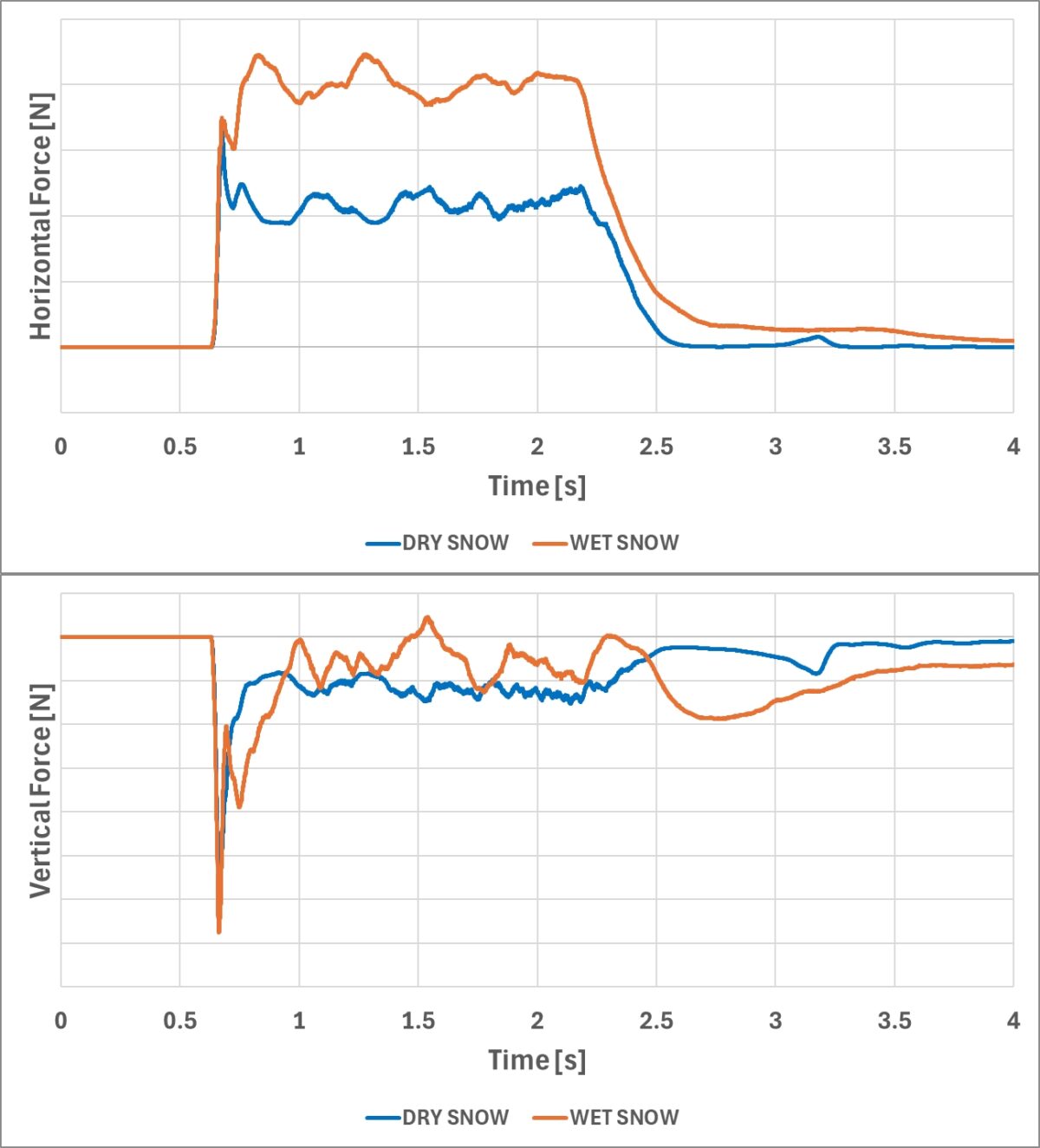
Figure 2: Horizontal and Vertical Force Analysis.
One of the unintended consequences of plow operation is the accumulation of snow on train bogies. This can lead to mechanical obstructions, increased weight, and even ice formation, which may affect braking performance and traction.
Using volume sensors in SPH simulations, engineers can quantify snow buildup and identify areas where accumulation is most severe. This data allows for the implementation of design modifications, such as improved deflectors or heating elements, to mitigate excessive snow deposition.
Video 4: Snow Accumulation on Bogie (Dry and Wet Snow).
PreonLab is a powerful tool for optimizing train snowplow performance. By analyzing snow dispersal patterns, stress distributions, force interactions, and snow accumulation effects, engineers can refine plow designs in a virtual environment before real-world testing. This approach enhances efficiency, reduces maintenance costs, and ensures safer railway operations during winter conditions. Through simulation-driven development, the reliability and effectiveness of train snowplows can be significantly improved, leading to more robust and resilient railway infrastructure.
Interested in optimizing your snowplow design? Try PreonLab for advanced simulations and ensure top performance before real-world deployment. Contact AVL for a demo!
Simulation results provided by Uros Cvelbar, AVL Slovenia.